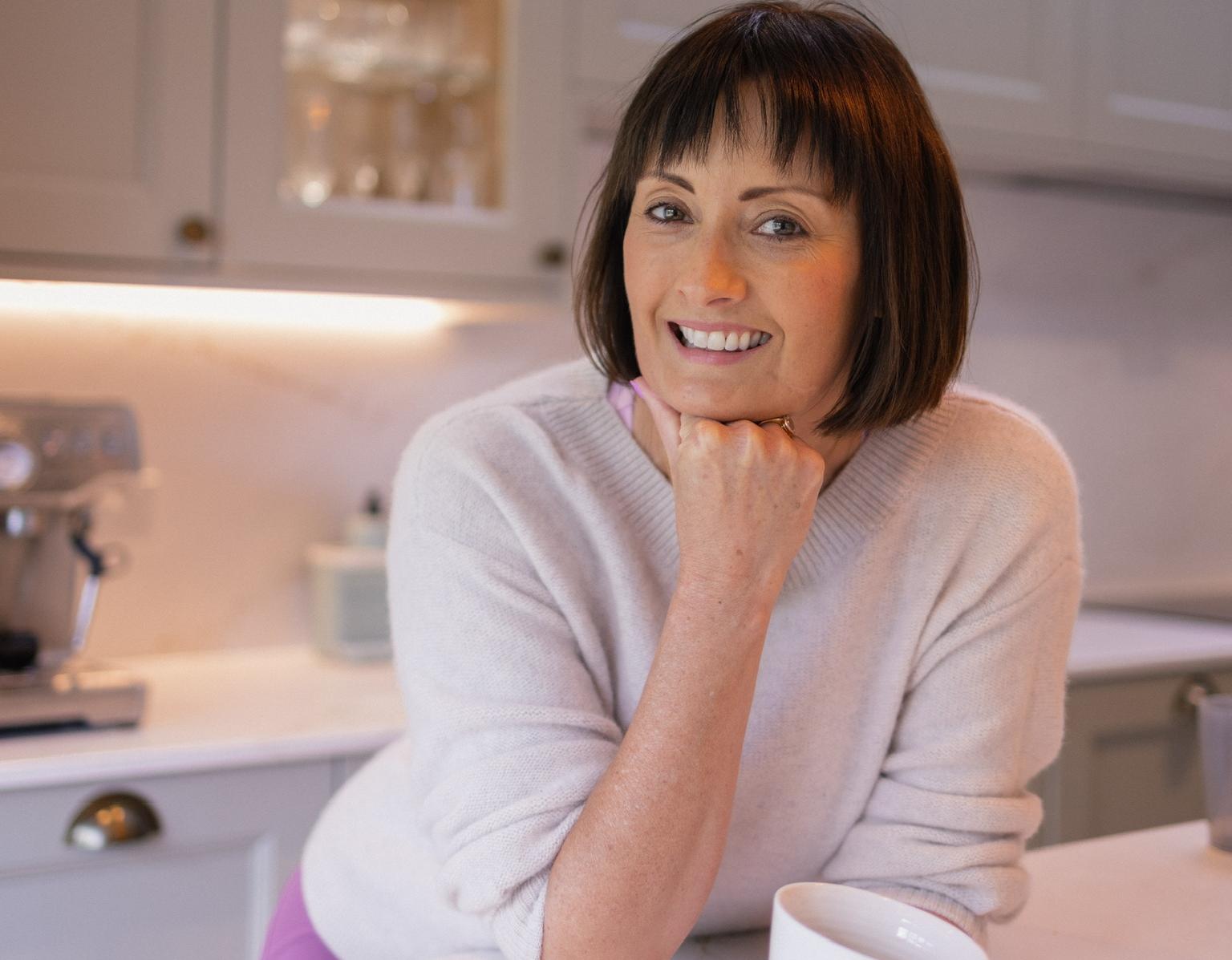
My lymphoma experience began in 2018. At the time I was a 37-year-old aspiring actress who had spent time in Los Angeles and was so excited about the future and what it might hold. A lot of my friends were married with children so I was hoping my turn would be soon!
That all changed when I was on holiday in the Caribbean with my mum. While I was there, I felt really unwell. I wasn’t sure whether I had picked up a virus, got flu or was anaemic. I was struggling with a pain in my side, drenching night sweats and felt really run down, tired and breathless. When your 67 year old asthmatic mother finds it easier than you to walk along the beach, or go up the stairs, you know something is wrong.
I had been feeling unwell for a number of weeks and was hoping it would pass, so I decided that if I hadn’t shaken this off when I got home then I would go and see a doctor. But by the end of the holiday, I couldn’t eat and felt really sick, almost like I was really nervous about something. I thought lying on a beach for a week would make me feel better but it highlighted just how ill I really was.
The day after I landed, I booked private blood tests for that same day as I had my friend’s wedding coming up that week and I needed to feel better for it. I was hoping it was something fairly straight forward.
The next morning, I received a call from the doctor telling me to go to hospital immediately as an emergency, she said my results showed something was seriously wrong and needed to call 999. I hoped I could get there quicker myself as a neighbour kindly dropped off my mum and me at the hospital. I was so scared of what it might be but I didn’t have a lump so didn’t think it was cancer and hoped the results were wrong. I was sent straight to ambulatory care, where further tests were taken, and then admitted to hospital. They placed me in an isolated room because I was neutropenic, although at the time I didn’t understand what that meant. I even wondered if I’d picked something up on my travels.
Over the next few days I had a blood transfusion, treatment to bring down my calcium levels, a CT scan, bone marrow biopsy, MRI and PET scans. Having lost my dad to cancer, I was terrified and looking up the symptoms on google didn’t help! The waiting for results was one of the hardest parts - I clung to the words of my consultant, who reminded me how far cancer research had come in the last decade and not to compare what had happened to my beloved dad who died aged 57. I was so grateful I had such a great team behind me. My dad was always the one who would tell me everything was going to be okay and I worried who could tell me that now? But somehow I found the strength and my mum was an incredible support too.
I needed treatment urgently and had to be closely monitored, but first the doctors had to be sure what they were dealing with. At that stage they weren’t certain if it was an autoimmune disease, a virus, a tropical disease, or a type of blood cancer. I had to make a list of all the countries I’d travelled to, and as an avid traveller, they joked it might be easier to list the places I hadn’t been!
It took around two weeks for the specialists to reach a diagnosis, not because the tests themselves were slow, but because my case was rare and difficult to identify. The waiting was unbelievably stressful, I just kept hoping it wouldn’t be cancer. After what felt like the longest 2 weeks of my life.
I was finally diagnosed with stage IV T-cell histiocyte-rich large B-cell lymphoma; a rare and aggressive type of non-Hodgkin lymphoma.
Even though I was very unwell by then, it was still a huge shock. You never really expect, or want, to hear those words.
I started my first of six rounds of R-CHOP chemotherapy 3 hours after my diagnosis and was also due to have spinal chemotherapy every other round as the lymphoma had been found in my bone marrow, lymph nodes and spleen.
I was just so pleased that I was finally on the road to recovery.
Treatment was gruelling. By now I was in a lot of pain as my spleen was pressing on other organs. The nurse said that even after one treatment the pain would reduce, and I was so surprised that she was right. After the initial shock, I was just so pleased that I was finally on the road to recovery and that I’d had the chance to be treated.
I was terrified of losing my hair and after my first cycle of treatment I kept checking my pillow, not realising it usually takes around three weeks to start falling out. As a single woman, I felt it would really affect who I was, how I looked, and what people thought of me. My friends were really supportive, one friend cut my hair short to soften the shock and my mum helped me choose a wig so I’d be prepared.
When it did all fall out, even my eyebrows and eyelashes, it was tough but also a strange relief, now I could focus on getting better. Losing my hair was so emotional because it had always felt tied up with who I was. But strangely, when it was gone, I found I was the kindest I’d ever been to myself and I still remind myself of that to this day!
One of the most difficult things for me was the effect the treatment had on my fertility. There wasn’t enough time to freeze my eggs because of how urgently I needed treatment. I knew the main focus was to save my life and it was better to be here and deal with the grief of infertility but all these years later it’s still something I’m processing whilst also being extremely grateful to be alive, I’ve realised both can be true!
Half way through treatment I had a PET scan which showed I was in complete metabolic remission. I couldn’t believe it, I had a pen ready to write down where the cancer was still in my body, I couldn’t believe it had all gone. I still needed to continue with the chemotherapy, but it was such a relief to know it was working.
I was exhausted, relieved, and also a little overwhelmed by what had happened. But it has led me to self-love and a deeper sense of purpose.
By the end of treatment, my bone marrow confirmed I was in remission. I was exhausted, relieved, and also a little overwhelmed by what had happened. I felt guilty for not going to the doctor’s sooner but I hope to raise awareness of symptoms so it can help someone else.
It often felt like I was watching everyone else get on with their lives while I was stuck in the middle of a life-changing experience and what had kept me going was planning a big party at the end of my treatment. It became a focus of my attention and something to aim for. I hadn’t realised how sick I still was. Four days after the party, I ended up in hospital with neutropenic sepsis which was yet another reality check.
I think I’d expected to get straight back to my normal life again, but now realised I needed a longer period of recovery, physically and emotionally.
I don’t want to forget about my experience of lymphoma because it was a wake-up call to what is really important in life. When you’re looking forward to something as simple as being well enough to go for a coffee with friends, you stop taking life and health for granted.
My first audition after cancer was for a cancer patient; and I didn’t get it! That was my moment to stop waiting for life to happen and start creating my own opportunities. I retrained as a life coach to help women find purpose and love their lives whatever life has thrown at them, and I’m now living my dream of writing my first book Who’s Going to Love Me Now? as it was the very question I asked whilst going through cancer and infertility but which eventually led me to self-love and a deeper sense of purpose. I don’t think there’s enough support for women facing these issues and finding their purpose in life so I’m grateful I get to play a part in changing that. Going through cancer has been one of the absolute worst experiences of my life but I cant help be grateful to being where I am today.
I hope by sharing my story it can raise awareness of symptoms and can give hope and comfort to people going through their own journey. You do find a strength you didn’t even know you had throughout it and there is life in-between treatments too. Just remember to be kind to yourself along the way.
You can find Helen on Instagram @helensrigby.
Helen shared her story with us as part of our Let’s talk lymphoma awareness campaign running throughout Blood Cancer Awareness Month in September.