2020 was a very strange year. The whole world was at the start of the pandemic, while my world had changed with the arrival of baby Alfie, a brother for my three-year-old Oscar. But I was feeling really poorly.
In late December 2020 I went to see my doctor as I had a pain in my shoulder. He suggested it was repetitive strain from carrying the baby, but this didn’t feel right to me. My baby was only 2 months old so didn’t weigh much, and I was struggling even to sit up in bed.
However, I let months go by and the cough I now had was put down to COVID. I was struggling to eat, and was passing out a lot. On one occasion me and the children were having lunch in a friends garden when I lost consciousness again, so she called an ambulance.
The hospital thought I was dehydrated so sent me home, but things got worse. I was now struggling to breathe and felt a swollen lump in my neck.
The lump made me determined to see the doctor again, who now referred me to a private hospital as, at the time, the NHS were dealing with COVID.
Within 3 to 4 weeks I saw a head and neck specialist who took bloods and examined me and said everything seemed fine. I left that appointment and was getting back in the car when I got a call saying they had decided to do an ultrasound of my neck and that I would get a letter in the post with an appointment.
At the ultrasound, the sonographer positioned the transducer over the area with the lump and stopped at that point to get someone. She was gone for 30 minutes and it was now fairly obvious that something was really wrong.
At 7.30pm that day I was told they suspected I had a blood condition and that it was probably cancer. A biopsy and a PET scan were arranged and I would have to wait for the results.
I felt cross that it had taken so long to get to this point, but what point were we at? I still didn't know exactly what was wrong and spend a really anxious time waiting for the results.
I was diagnosed with non-Hodgkin lymphoma. It was explained that the type of lymphoma I had was a cross between diffuse large B-cell lymphoma and primary mediastinal B-cell lymphoma (PMBCL). PMBCL develops in the mediastinum which is the area between the lungs, containing the heart, thymus, oesophagus, trachea and lymph node. I had a lump the size of a grapefruit in my chest, and the proximity to my heart was why I was passing out.
I was to have six rounds of R-CHOP chemotherapy which started on Boxing Day. I ended up in hospital for two weeks. The tumour was so big they were worried about tumour lysis which can occur when cancer cells break down rapidly and release their contents into the bloodstream.
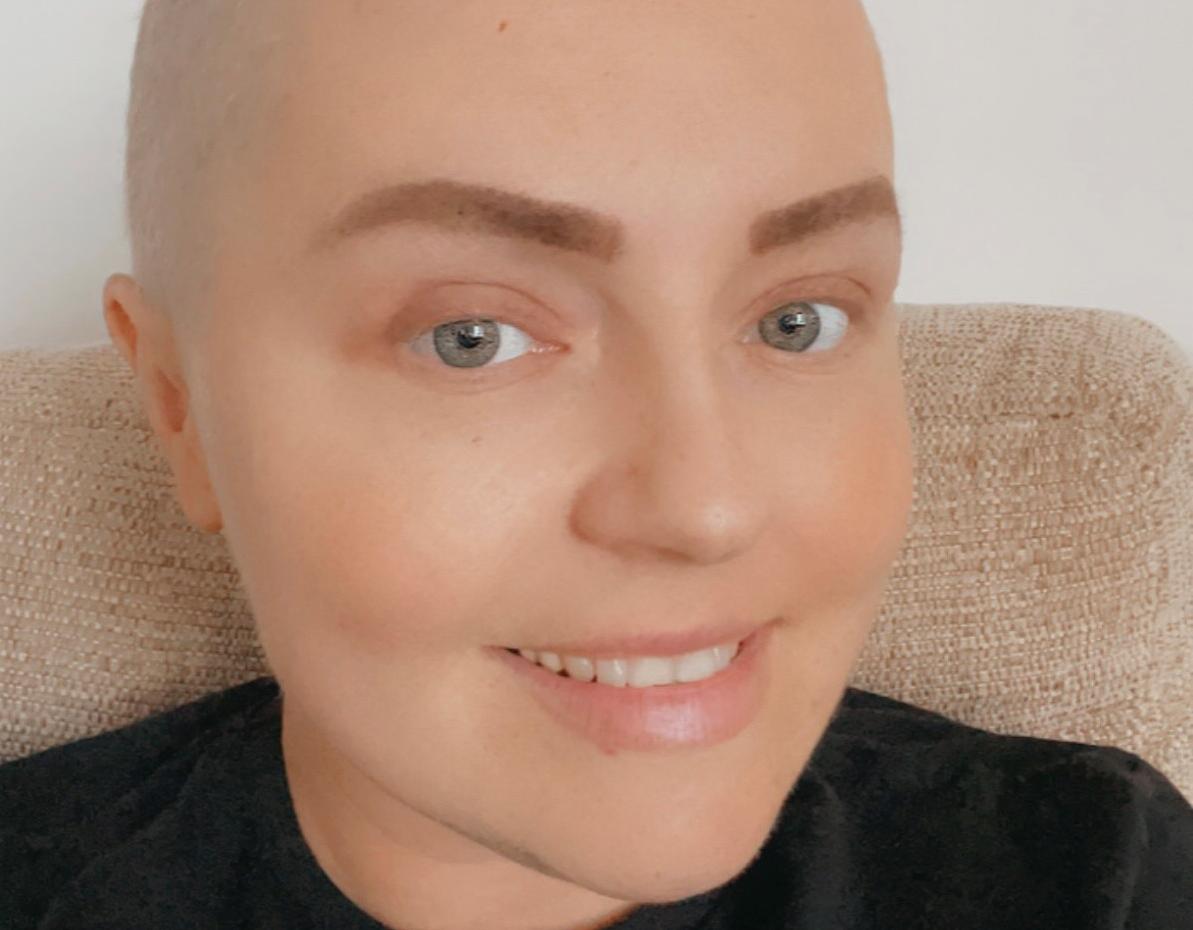
As it was COVID I could have no visitors, so my family dropped me off at the hospital looking reasonably well and collected me two weeks later with no hair, having lost weight and generally looking very unwell.
I was fortunate that grandparents were able to help out with my boys and my partner Daniel was able to take as much time off as he needed during this time.
At the time I didn’t feel that I coped very well, but looking back I think I coped pretty well under the circumstances, as it was such a stressful time. A scan halfway through indicated that the tumour had reduced by about half, so my team were happy that everything was going in the right direction. However, they said they thought I should have radiotherapy after chemotherapy, as a belt and braces approach.
After chemotherapy I had a six week break before radiotherapy started, so we took the children to Cornwall. I can’t tell you how wonderful it was to be with the family and do something else other than have treatment.
I had the radiotherapy in a different hospital that was 20 minutes away from home. I had it every day for three weeks and didn’t mind going on my own. I liked being able to go into the Maggie’s Centre afterward for a cuppa.
As the days passed, tiredness and fatigue kicked in. Worse still was that I was finding it really difficult to swallow and couldn’t eat or manage pills; I couldn’t even drink water.
It was explained that a PET scan would be done three months later as the treatment could still be working before then. The PET scan showed there was no evidence of disease.
My life for the last six or seven months had been consumed with my cancer. My life had centred around hospital appointments, and I felt safe wrapped in their care. So what now?
To start with, I had follow-up appointments every three months with the haematology team. After a year it was increased to six months, then nine months. My last appointment was in February 2025 when they discharged me.
A diagnosis of cancer changed me. I know I appreciate every single day and don’t want to miss out on any time with my boys as I felt I’d missed so much of Alfie’s early life.