
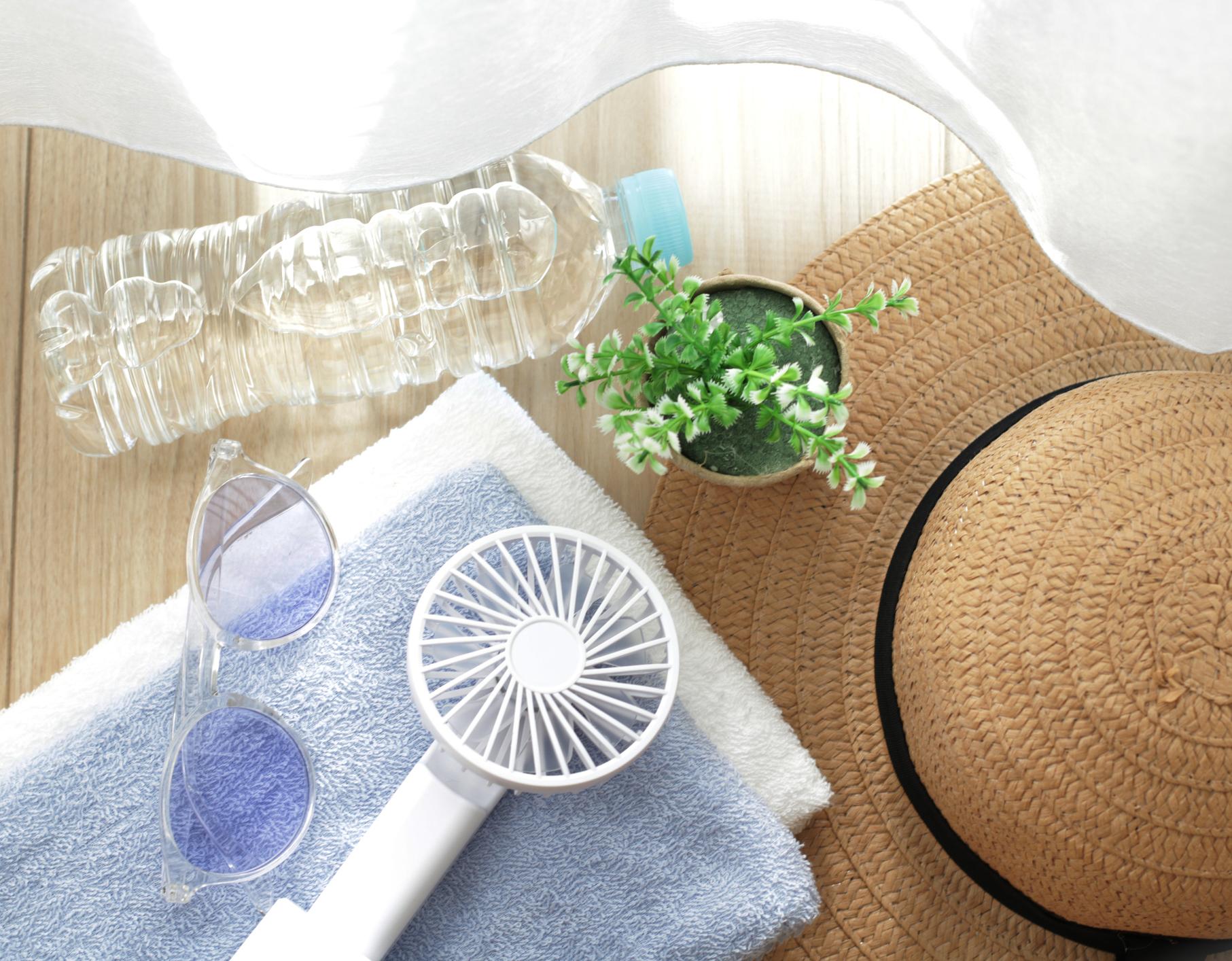
We recently asked our Facebook users, online support meeting members and two clinical nurse specialists for their tips on managing in the heat. Here are some of the suggestions from the community based on what they personally found useful and what they would like to pass on to others. This is not intended to be medical advice and is not a replacement for advice from your medical team. If you are looking for specific guidance for your own personal circumstances always consult your medical team.
- If you are indoors, and it is hotter outside, keep the windows closed and close blinds or curtains.
- Use a fan to cool the air. Use a handheld fan outside. Putting the fan in front of an open window might help if it is hotter inside than outside, or put a bowl of iced water or a freezer block in front of the fan to make the air even cooler. You can get 'misting fans' that give a fine mist of water along with the cooling affects of the fan. Neck fans (that are worn around your neck) can give a hands-free option when you are moving around.
- Use cooling sprays or mists - and keep them in the fridge for an even more refreshing spray!
- A cold compress or flannel/cloth/muslin on the back of your neck, your forehead, or on your wrists or feet can help to keep your temperature down if hot. Soaking your feet in cool water might also help. (Take extra care if you have peripheral neuropathy).
- Having a cool shower, or washing your hair and leaving it to air-dry can help to cool you. Using a head covering that you can keep wet might also help.
- Wear light fabrics to allow the air to flow, and a silk pillowcase (or similar) can be cooler on your skin. Cotton clothes and nightwear might help to soak up sweat - so you feel cooler!
- Keep hydrated. Keep drinks in the fridge or freezer, and have watery ice pops.
- It sounds obvious but stay out of the heat and stay indoors if possible, particularly during the hottest parts of the day.
- Cooling mats (like the ones you can get for pets) are good to rest your feet on or lie on in the hot weather. Sleeping downstairs might be cooler than upstairs too.
- Putting a cotton bed sheet in the fridge or freezer gives you a cool surface when you go to bed.
- If you are outside, follow all of the usual sun safety guidelines (and remember that you may be more sensitive to the sun). Stay in the shade, wear a protective sunhat, use SPF and keep hydrated. A handheld fan might also be useful.
- Consider resting during the day and doing any activities in the evening or early morning when it is probably cooler.
- Go somewhere you know it will be cooler, like an air-conditioned library or café - but be aware of the shock of going from hot to cold environments!
- Some relaxation practices - such as Sitali Pranayama yoga - are thought to help lower your temperature.
- If you have been staying in to avoid the heat, perhaps for a few days, remember to be mindful of your mental health: going out for a walk in the cooler hours can help you feel connected to nature and help improve your mood.
- You can find more guidance on the NHS website for how to cope in hot weather.
*Take care if you are using any of the direct-to-skin suggestions listed, particularly if you have sore or sensitive skin, or peripheral neuropathy, and speak to your medical team if you are unsure whether something is appropriate for you.
You can find this information on our webpage, Top tips for travel. We have more information about travelling outside the UK if you have lymphoma and about travel insurance.